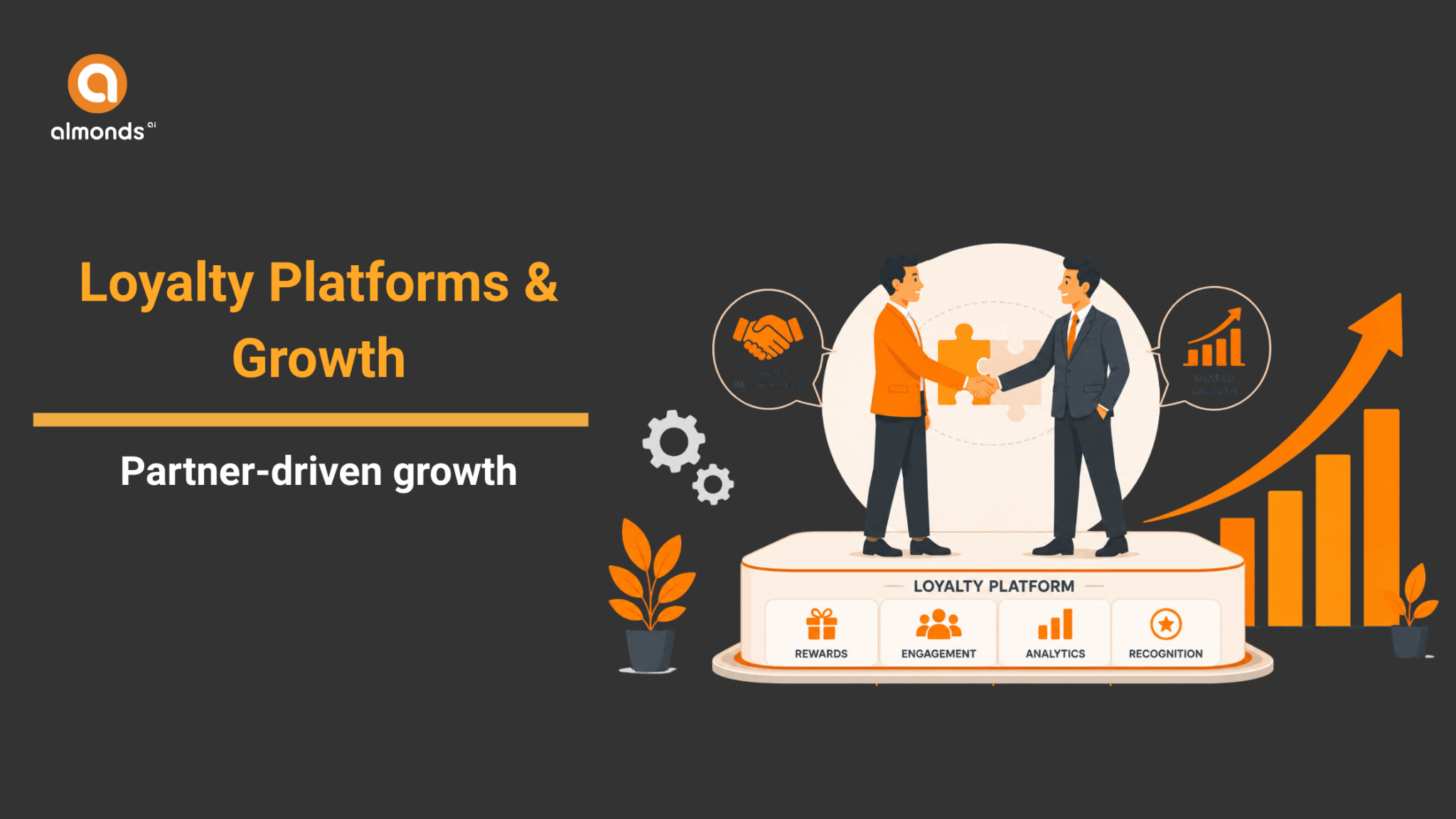

The loyalty technology market has evolved significantly over the last decade. What was once a simple points-and-rewards system has become a sophisticated engagement ecosystem powered by AI, personalization, analytics, gamification, and real-time behavioral insights.
For brands evaluating loyalty platforms today, the challenge is no longer whether to launch a loyalty program. The challenge is selecting the right operating model.
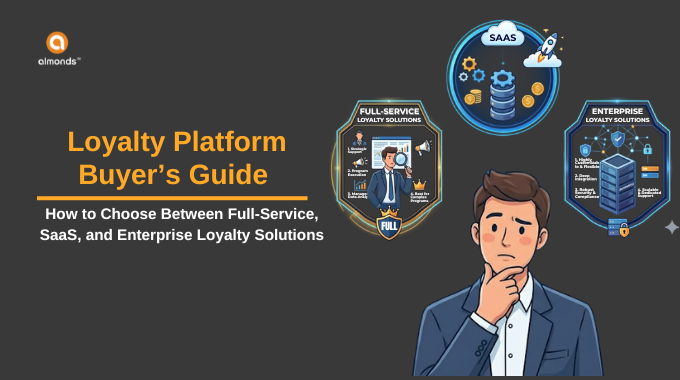
Should you invest in an enterprise-grade loyalty platform that offers maximum flexibility but requires significant internal resources? Should you choose a SaaS solution that enables rapid deployment and self-service management? Or should you partner with a full-service loyalty provider that combines technology, strategy, operations, rewards, analytics, and program execution?
The answer depends on your organization’s goals, resources, budget, timeline, and internal capabilities. This guide explores the modern loyalty platform landscape and provides a practical framework for evaluating solutions across enterprise, SaaS, and full-service models.
Key Takeaways
- Loyalty programs are increasingly evolving into engagement platforms that drive retention, advocacy, channel performance, and revenue growth.
- AI, personalization, behavioral analytics, and gamification are becoming standard requirements rather than premium features.
- Many loyalty programs fail because organizations underestimate the operational complexity required for sustainable engagement.
- Enterprise platforms offer maximum flexibility but require substantial internal ownership and investment.
- SaaS platforms provide speed and affordability but may limit customization and strategic support.
- Full-service loyalty platforms bridge the gap by combining technology with strategy, execution, analytics, and operational management.
- Selecting the right solution depends less on platform features and more on organizational readiness.
Loyalty Industry Overview
The Evolution of Loyalty Platforms in India
Loyalty programs have changed dramatically over the past decade. Historically, loyalty programs focused on transactions. Customers earned points, redeemed rewards, and repeated purchases. Similarly, channel loyalty programs rewarded dealers, distributors, and retailers based on sales performance.
Today, loyalty platforms are expected to do much more. Modern loyalty programs drive engagement, influence behavior, improve retention, gather behavior intelligence, strengthen relationships, and support business growth across multiple dimensions.
This shift has been driven by several market forces. Channel partner’s expectations have increased. Channel ecosystems have become more competitive. Data availability has expanded. Digital engagement has accelerated. Organizations now expect loyalty programs to contribute directly to measurable business outcomes.
As a result, loyalty platforms have evolved from reward engines into engagement ecosystems.
Common Loyalty Platform Uses
Channel Partner Engagement
Manufacturers and distribution-led businesses use loyalty platforms to increase dealer participation, distributor engagement, training completion, product adoption, and sales performance.
Sales Incentive Programs
Organizations use loyalty platforms to motivate sales teams through performance-based incentives, recognition programs, achievement tracking, and rewards.
Customer Loyalty Programs
Retailers, consumer brands, and service providers use loyalty ecosystems to increase retention, encourage repeat purchases, and improve customer lifetime value.
Employee Engagement Programs
Companies increasingly use loyalty technology to support employee recognition, learning programs, wellness initiatives, and performance engagement.
The Loyalty Platform Challenge
Why Traditional Loyalty Program Approaches Often Fail
Many organizations begin loyalty initiatives with the assumption that launching a platform is the primary challenge.
In reality, launching the loyalty platform is often the easiest part. Sustaining engagement, managing rewards, ensuring compliance, maintaining relevance, analyzing performance, and continuously optimizing the program require significant effort. This is where many loyalty initiatives struggle. Common challenges include:
- Low program participation after launch
- Poor reward redemption rates
- Limited internal resources
- Difficulty measuring ROI
- Fragmented technology ecosystems
- Lack of personalization
- Compliance and governance concerns
- Limited engagement beyond incentives
Technology alone rarely solves these problems. Success requires a combination of platform capabilities, strategic planning, operational execution, analytics, and ongoing optimization. This is why understanding different solution models is critical before selecting a provider.
Understanding the Loyalty Platform Landscape
Enterprise Loyalty Platforms
Enterprise loyalty platforms are designed for large organizations with extensive operational requirements, complex integrations, and dedicated internal teams. These solutions prioritize flexibility, scalability, and customization.
Organizations typically configure loyalty logic, engagement journeys, reward structures, integrations, and analytics frameworks according to their specific requirements.
Typical Features
- Advanced loyalty engines
- Enterprise-grade integrations
- Complex segmentation
- Real-time personalization
- Multi-country support
- Large-scale member management
- Advanced reporting and analytics
Advantages
Enterprise platforms provide maximum control and customization. Organizations can tailor virtually every aspect of the program to align with their business requirements. These solutions are often well suited for global enterprises managing millions of members across multiple markets.
Limitations
Enterprise implementations are typically resource-intensive. Organizations often require:
- Dedicated loyalty teams
- IT resources
- Analytics specialists
- Integration support
- Ongoing operational management
Implementation timelines frequently range from six to eighteen months.
Ideal Use Cases
Enterprise loyalty platforms are best suited for organizations requiring extensive customization, complex system integrations, and large-scale global program management.
SaaS Loyalty Platforms
SaaS loyalty platforms prioritize speed, simplicity, and affordability. These solutions enable organizations to launch loyalty programs quickly using predefined frameworks, templates, and self-service administration tools.
Typical Features
- Pre-built loyalty workflows
- Self-service management
- Basic analytics
- Standard integrations
- Reward management
- Campaign creation tools
Advantages
SaaS platforms offer faster deployment and lower upfront costs. Organizations can often launch programs within weeks rather than months. The operational burden is lower than enterprise solutions, making SaaS attractive for growing organizations with limited internal resources.
Limitations
Customization is often constrained by platform architecture. As programs become more sophisticated, organizations may encounter limitations related to integrations, personalization, analytics, and engagement design.
Ideal Use Cases
SaaS platforms are well suited for organizations seeking rapid deployment, standard loyalty functionality, and lower operational complexity.
Full-Service Loyalty Platforms
Full-service loyalty platforms combine technology, strategy, execution, analytics, rewards management, and operational support within a unified engagement model. Instead of simply providing software, full-service providers help organizations design, launch, manage, optimize, and scale loyalty programs.
Typical Features
- End-to-end program design
- Technology platform
- Strategic consulting
- Rewards management
- Creative services
- Compliance support
- Analytics and optimization
- Ongoing program management
Advantages
Organizations gain access to technology and expertise without building extensive internal loyalty operations. The provider assumes responsibility for many aspects of implementation and ongoing management. This significantly reduces execution risk while accelerating time-to-value.
Limitations
Organizations may have less direct operational control compared to enterprise platforms. Success depends on selecting a partner with strong loyalty expertise and proven execution capabilities.
Ideal Use Cases
Full-service platforms are particularly effective for:
- Channel loyalty programs
- Dealer and distributor engagement
- Retail loyalty programs
- Employee engagement initiatives
- Mid-market and enterprise brands seeking strategic support without enterprise-level complexity
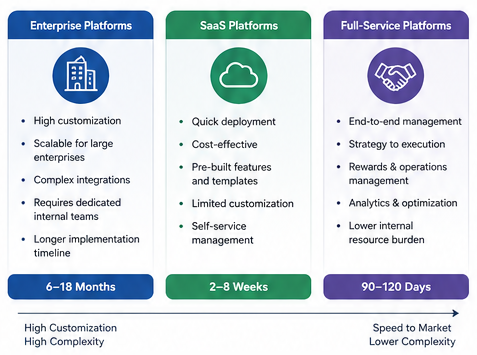
Loyalty Platform Comparison
Dimension |
Enterprise Tier |
SaaS Tier |
Full-Service Tier |
| Primary Buyer | Large Enterprises | SMB & Mid-Market | Mid-Market & Enterprise |
| Implementation Timeline | 6–18 Months | 2–8 Weeks | 90–120 Days |
| Annual Platform Cost | $200K–$1M+ | $5K–$50K/Month | Variable Managed Cost |
| Internal Resources Required | High | Low to Moderate | Low |
| Customization Depth | Very High | Limited | High |
| Strategic Support | Limited | Optional | Included |
| Analytics & Optimization | Internal Ownership | Platform-Based | Managed Service |
| Rewards Management | Internal | Platform Supported | Fully Managed |
| Ideal Program Complexity | Very High | Low to Medium | Medium to High |
| Risk Profile | High | Moderate | Moderate to Low |
Key Capabilities to Evaluate Before Choosing a Loyalty Platform
Selecting a loyalty platform should not begin with a feature checklist. It should begin with understanding the business outcomes the program is expected to deliver.
Many organizations become distracted by loyalty mechanics such as points, tiers, and rewards while overlooking the capabilities required to sustain engagement, measure performance, and scale successfully.
The following areas deserve careful evaluation during the buying process.
1. Personalization and AI Capabilities
Modern loyalty programs are increasingly expected to deliver personalized experiences. Customers, channel partners, and employees engage more when communications, rewards, and engagement journeys reflect their behaviors and preferences. When evaluating providers, organizations should consider:
- Behavioral segmentation capabilities
- AI-driven recommendations
- Predictive engagement models
- Personalized campaign automation
- Trigger-based communications
- Dynamic reward allocation
Platforms that rely solely on static campaigns often struggle to maintain long-term engagement.
2. Rewards and Catalog Flexibility
Rewards remain one of the most visible components of a loyalty program. However, managing rewards across geographies, member types, currencies, and compliance requirements can quickly become complex. Key evaluation criteria include:
- Global reward coverage
- Digital and physical reward options
- Gift cards and merchandise
- Travel and experience rewards
- Localized fulfillment
- Multi-currency support
- Vendor management capabilities
Organizations operating across multiple markets should pay particular attention to fulfillment infrastructure and reward delivery reliability.
3. Engagement and Gamification
Modern loyalty programs increasingly focus on behavioral engagement rather than transactional rewards alone. Buyers should evaluate whether platforms support:
- Challenges and missions
- Progression systems
- Achievement tracking
- Tier-based engagement
- Recognition programs
- Learning and certification journeys
- Community engagement capabilities
Loyalty programs that successfully combine rewards with engagement mechanics typically achieve stronger participation and retention outcomes.
4. Analytics and Reporting
One of the most common reasons loyalty programs underperform is a lack of visibility into program effectiveness. Organizations should look for platforms that provide:
- Real-time dashboards
- Participation analytics
- Engagement reporting
- Redemption insights
- Retention tracking
- ROI measurement
- Predictive analytics
Analytics should support decision-making rather than simply reporting historical activity.
5. Integration Ecosystem
Loyalty platforms rarely operate in isolation. Organizations often require integrations with:
- CRM systems
- ERP platforms
- E-commerce platforms
- POS systems
- Marketing automation tools
- Customer data platforms
- Learning management systems
The depth and complexity of required integrations often influence which solution category is most appropriate.
6. Scalability and Global Readiness
Programs that begin with a few thousand members may eventually support hundreds of thousands or millions of participants. Buyers should assess:
- Member scalability
- Global deployment support
- Localization capabilities
- Regulatory compliance
- Data security standards
- Multi-language functionality
A platform that supports today’s requirements but cannot support tomorrow’s growth may create significant migration challenges later.
7. Buyer’s Decision Framework
The most successful loyalty technology decisions begin with organizational alignment rather than vendor evaluation. Before selecting a platform, decision-makers should answer five critical questions.
8. How Complex Is the Program?
Organizations should evaluate whether they require:
- Simple earn-and-burn loyalty
- Channel partner engagement
- Multi-tier loyalty programs
- Behavioral engagement journeys
- Multi-country deployments
Complexity often determines whether SaaS, full-service, or enterprise solutions are most appropriate.
9. What Internal Resources Are Available?
Many loyalty initiatives underestimate operational requirements. Consider whether internal teams can support:
- Program management
- Campaign execution
- Analytics
- Creative development
- Compliance oversight
- Reward fulfillment
- Technical administration
If internal resources are limited, full-service providers often deliver stronger outcomes.
10. How Important Is Speed to Market?
Organizations launching a program quickly may prioritize deployment speed. Typical timelines include:
Solution Type |
Typical Launch Timeline |
| SaaS Platform | 2–8 Weeks |
| Full-Service Platform | 90–120 Days |
| Enterprise Platform | 6–18 Months |
Time-to-value can be a significant factor when evaluating options.
11. How Much Customization Is Required?
Some organizations require highly customized loyalty ecosystems. Others prioritize speed, simplicity, and operational efficiency. Customization requirements often determine whether enterprise platforms or managed full-service solutions are the better fit.
What Business Outcomes Matter Most?
Decision-makers should clearly define success metrics before selecting technology. Common objectives include:
- Increased retention
- Improved engagement
- Higher sales performance
- Channel activation
- Customer lifetime value growth
- Channel partner participation
- Employee engagement
The platform should align with the desired outcomes rather than simply providing features.
a) ROI and Business Impact
The most effective loyalty programs create measurable business value. While results vary by industry and program design, successful initiatives typically improve performance across several dimensions.
b) Engagement Impact
Organizations often see:
- Higher active participation rates
- Increased campaign engagement
- Improved program adoption
- Stronger behavioral participation
Programs that combine personalization and behavioral engagement frequently outperform traditional transactional loyalty models.
c) Retention Impact
Retention improvements can produce significant financial benefits. Research consistently shows that increasing retention often generates a greater impact on profitability than acquiring new customers or partners.
Loyalty programs help strengthen relationships by increasing engagement frequency and reducing churn risk.
d) Revenue Impact
Well-designed loyalty ecosystems can contribute to:
- Increased repeat purchases
- Higher average transaction values
- Greater share of wallet
- Improved channel performance
- Increased partner advocacy
The impact becomes particularly significant when loyalty programs influence behavior rather than simply rewarding transactions.
Why Almonds AI
Choosing a loyalty platform is about more than technology. Success depends on combining engagement strategy, analytics, rewards, and execution. Almonds AI helps organizations build loyalty and engagement programs that drive measurable business outcomes through:
- ChannelVerse: A full-service platform combining strategy, implementation, operations, analytics, and program management.
- Kounter: A SaaS platform designed for rapid deployment and self-service management.
- AI-driven Engagement: Personalization, behavioral insights, and analytics to improve participation and retention.
- Global Rewards Infrastructure: Scalable reward fulfillment across multiple countries and categories.
- Channel Expertise: Deep experience in dealer, distributor, sales incentive, and partner engagement programs.
This flexible approach allows organizations to choose the model that best fits their goals, resources, and program complexity.
The Right Loyalty Platform Is About Operating Model
The loyalty platform market offers more choices than ever before. Enterprise solutions provide extensive customization and scalability. SaaS platforms offer speed and simplicity. Full-service providers bridge the gap by combining technology with strategy and execution.
The right choice depends on your organization’s goals, resources, timeline, and operational readiness. The most successful loyalty programs are not necessarily built on the most sophisticated technology. They are built on the right combination of platform capabilities, strategic alignment, operational support, and engagement expertise.
Organizations evaluating loyalty platforms should focus less on feature comparisons and more on selecting the operating model that best supports long-term business outcomes. Because in loyalty, success is rarely determined by software alone. It is determined by the ability to create meaningful engagement at a scale.
FAQs
How long does it take to implement a loyalty platform?
Implementation timelines depend on the solution type. SaaS loyalty platforms can often be launched within two to eight weeks. Full-service loyalty platforms typically require 90 to 120 days to design, configure, integrate, and launch. Enterprise loyalty platforms may take six to eighteen months due to customization requirements, data migration, system integrations, and change management processes.
How much does a loyalty platform cost?
The cost of a loyalty platform varies significantly based on the deployment model. SaaS platforms may range from a few thousand dollars per month to enterprise subscriptions. Enterprise loyalty platforms often require annual licensing fees, implementation costs, and dedicated internal resources. Full-service loyalty platforms generally bundle technology, strategy, analytics, and program management into a managed service model, making total costs more predictable.
How long does it take to implement a loyalty platform?
Implementation timelines depend on the solution type. SaaS loyalty platforms can often be launched within two to eight weeks. Full-service loyalty platforms typically require 90 to 120 days to design, configure, integrate, and launch. Enterprise loyalty platforms may take six to eighteen months due to customization requirements, data migration, system integrations, and change management processes.
What is the difference between ChannelVerse and Kounter?
ChannelVerse is a full-service loyalty and engagement platform that combines technology, strategy, implementation, analytics, rewards management, and ongoing program execution. Kounter is a SaaS loyalty platform designed for organizations that want greater control over program management and faster deployment. The choice depends on whether an organization requires a managed loyalty operating model or a self-service platform approach.